
Saturday night palsy is a temporary nerve injury caused by compression of the radial nerve
most often occurring during sleep. It commonly develops after prolonged pressure in the armpit (axillary region) or upper arm, or with improper use of crutches.¹ This compression interferes with normal nerve signalling, leading to weakness, numbness, and difficulty moving the wrist and fingers.
One of the hallmark signs of Saturday night palsy is wrist drop, where the wrist and fingers cannot be actively lifted. Although the sudden onset of symptoms can be alarming, the condition is usually reversible. With appropriate care and early intervention, most individuals experience full recovery.²
What Is Saturday Night Palsy?
Saturday night palsy is a type of radial nerve palsy caused by prolonged external pressure on the radial nerve.² The radial nerve runs from the shoulder down the back of the upper arm, through the forearm, and into the hand. It controls the muscles responsible for elbow extension, supination (rotation of the forearm so the palm faces upward), and extension of the wrist and fingers. It also supplies sensation to part of the back of the hand and thumb.
When this nerve is compressed for an extended period, nerve conduction is disrupted. This results in muscle weakness, reduced coordination, and altered sensation in the affected arm and hand. ² The condition is frequently associated with falling asleep in an awkward position, such as with the arm draped over a chair or bed. Alcohol consumption significantly increases the risk, as it reduces movement and pain awareness during sleep. ²
Common Causes of Saturday Night Palsy

Saturday night palsy typically occurs due to sustained pressure on the radial nerve. Common causes include:
- Sleeping with the arm hanging over a chair, couch, or bed
- Prolonged pressure on the upper arm or armpit
- Excessive alcohol or sedative use
- Sleeping on hard or uneven surfaces
- Improper or prolonged use of crutches
- Extended periods of immobilisation
Alcohol is a major contributing factor because it prevents normal repositioning during sleep. This allows nerve compression to persist for several hours, increasing the likelihood of nerve injury.
Symptoms of Saturday Night Palsy
Symptoms usually appear suddenly upon waking and may include:²
Wrist drop (inability to lift the wrist or fingers)
Weak grip strength
Numbness or tingling on the back of the hand or thumb
Difficulty extending the fingers
Mild discomfort or aching in the upper arm
How Is Saturday Night Palsy Diagnosed?
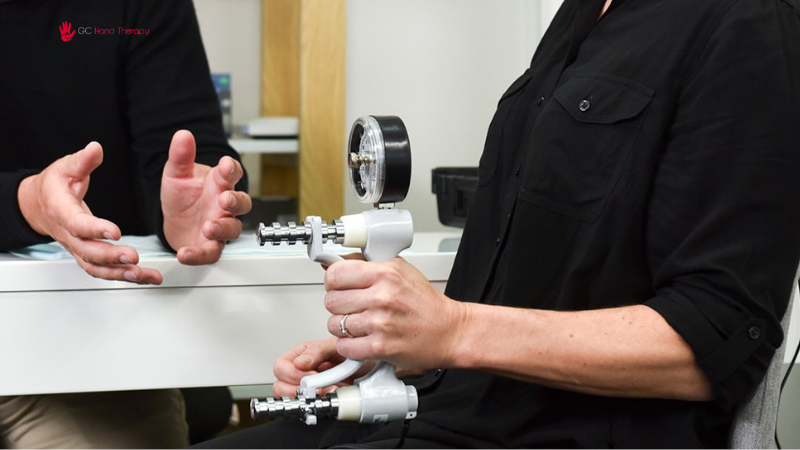
Diagnosis of Saturday night palsy is primarily clinical. A healthcare professional or Hand Therapist will assess muscle strength, movement, and sensation in the affected arm. A detailed medical history is also important, including recent sleeping positions, alcohol intake, crutch use, or prolonged pressure on the arm.
In some cases, nerve conduction studies or electromyography (EMG) may be used to determine the severity of radial nerve injury, particularly if symptoms persist longer than expected.
Treatment Options for Saturday Night Palsy
Most cases of Saturday night palsy resolve with conservative treatment, and surgery is rarely required. Treatment aims to protect the nerve, maintain hand function, and support nerve recovery.
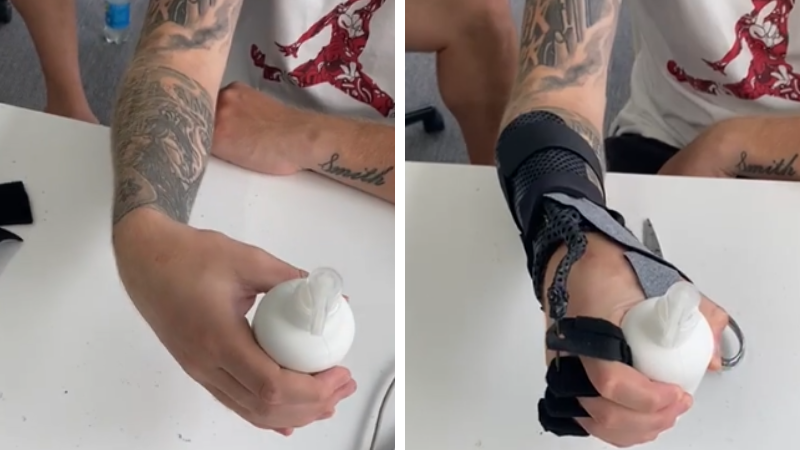
Common treatment approaches include:
Early intervention helps prevent secondary complications and supports a smoother recovery process.
How Is Saturday Night Palsy Diagnosed?
Recovery time for Saturday night palsy depends on the severity and duration of nerve compression. Mild cases often improve within 2–6 weeks, while more severe injuries may take several months for full recovery.
The overall prognosis is excellent. With appropriate management and therapy, most individuals regain full wrist and finger function, normal sensation, and strength.
Recovery Time and Prognosis
Diagnosis of Saturday night palsy is primarily clinical. A healthcare professional or Hand Therapist will assess muscle strength, movement, and sensation in the affected arm. A detailed medical history is also important, including recent sleeping positions, alcohol intake, crutch use, or prolonged pressure on the arm.
In some cases, nerve conduction studies or electromyography (EMG) may be used to determine the severity of radial nerve injury, particularly if symptoms persist longer than expected.
Key Takeaway
Saturday night palsy is a temporary radial nerve compression injury that most often occurs during sleep. Although waking up with wrist drop or hand weakness can be distressing, the condition is usually reversible. Awareness of risk factors, early recognition of symptoms, and conservative treatment are essential for optimal recovery.
References
Colditz J (1987). Splinting for Radial Nerve Palsy, Journal of Hand Therapy 1:18-23
Gragossian A, Varacallo MA. Radial Nerve Injury. [Updated 2023 Aug 14]. In: StatPearls [Internet]. Treasure Island (FL): StatPearls Publishing; 2025 Jan-. Available from: https://www.ncbi.nlm.nih.gov/books/NBK537304/
